


With every speculative bubble comes a backlash of activism, fear and concern. Data Centers are at the center of several national and international debates. Artificial intelligence, machine learning and large language models (LLMs) have all been rebranded as our inevitable technological future, but due to their existential state as theoretical, outcomes-based, black box systems that we aren’t allowed to touch, feel, audit, regulate or even criticize, we are left to direct our ire and anxiety with the changing technological landscape at the physical structures needed to power this transitional evolution.
Farmers, teachers, welders, veterans, doctors, philosophers, mothers and fathers, activists, young, old, the over educated and undereducated alike all feel this moment in our history as distinctly apathetic to the realities of human existence, if not outright antagonistic to those realities. We are demanding an explanation now, at this bottleneck of infrastructural development which the technology titans, who are leading us into this not-so-bright future, rely on to power its progress.
Humans are not in the way of development. The citizens of Ohio are not the problem. Our concerns about the future of our environment, communities, and economy should not be ignored. The demands made by data center property developers and their end-users make it clear that they do not consider the environment we occupy, its needs, our place in it and how we leave it to our children, as important as their profits and bottom line.

I have personally coordinated protest efforts in the Village of Perry for months. I have attended meetings in Portage County, where property developers and tech company representatives claimed questions would be answered, only to watch residents leave angrier than they were when they showed up.
I’ve spoken to city managers, council members, trustees, county commissioners and state reps who all feel a combination of insulted, misled, confused and frustrated with the way investors and trillion-dollar industries can sequentially take full advantage of our planning processes at a local level, while manipulating governing bodies at the state and federal level to ban referendums, initiatives and moratoriums.
This leaves local officials with a choice to lose their right to represent their communities through censure, or lose their seat at the ballot box.
Some of these situations are the results of bad-faith property purchase agreements that leave municipalities who want to see economic development in their communities outgunned at the negotiation table. Some end up with purchase agreements with no cap on renumerations if the community rejects zoning plans, environmental plans, or the tax abatements themselves.
Residents wake up to news that their local officials signed non-disclosure agreements, and are now legally bound not to share the process or the terms and conditions with their constituents until the contract is signed, and wet ink binds their community’s future to a technology that no one is willing to explain or, in most cases, which no one even understands themselves.
These projects are all backed by private equity investors that see a chance to speculate wildly on the next big thing. In the last ten years, most speculations have been theoretical, happening in the cloud or “on-line.” Today, we find the field for speculation is bursting into our communities and the players pushing these speculative investments already have a robust network of lobbyists, PR firms, consultants and lawyers to manipulate national policy environments. They have been doing it for decades—enriching themselves by deregulating governing agencies and calling it “prosperity.” Now they are aiming these engines of manipulation at local townships, villages and municipalities, and those local governments feel abandoned and outgunned.
The easiest way to see the truth in this new technological ecosystem is by looking at the details of these proposed projects. When these companies claim “there won’t be any environmental impact,” it’s proof that their specialists know environmental claims made in Ohio will only be enforceable after the project is completed, and if there is a negative impact.
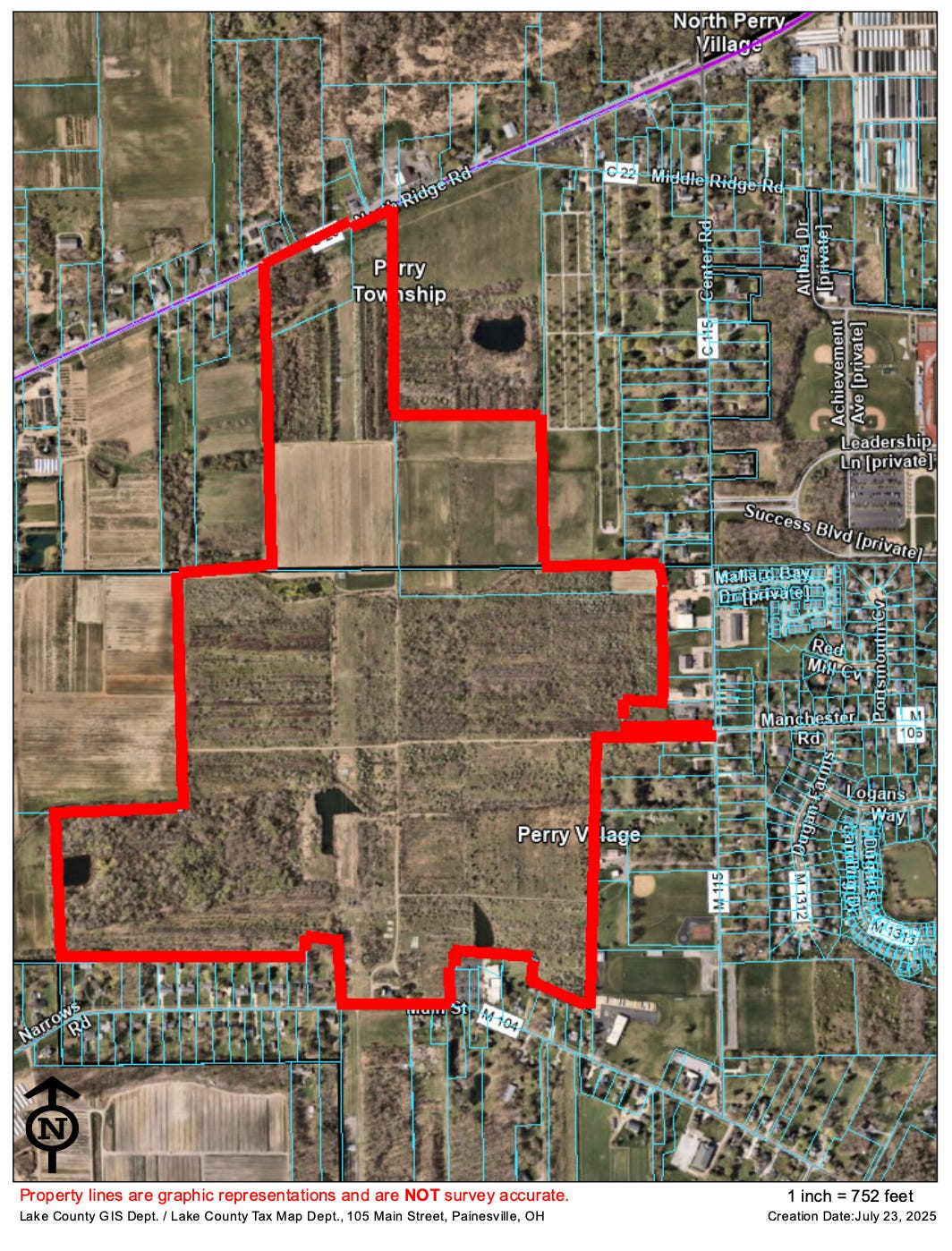
Early data centers used ground water to cool their GPU processing banks in open loop systems. Now, every proposal to communities magically showcases “closed loop cooling systems” that will use only thousands of gallons of water a day, instead of hundreds of thousands. However, when permits are requested, the request becomes half-a-million gallons per day, as was the case in the Village of Perry. That is more water than a midscale brewery would use to make a product that is 95% water.
The public relations approach these companies follow is to “tell them what they want to hear.” These developers know that once trucks are on site, materials are in the flat, and the building trades have won their bids, the local governments will have to issue a variance for any changes to the plans they already forced through the zoning process. They know how the system works—the property developer will get what they want, and the only losers are the people naïve enough to believe that the developers were ever going to spend enough money to do it the right way.
The second claim that pops up in every proposal is the impressive amount of jobs these data centers will create. These data centers are sold as the epitome of technological efficiency for processing raw data collected through surveillance of our social media accounts, patterns of our consumer behavior, and data from the constantly monitoring technology that is infecting our lives in a suffocating way.
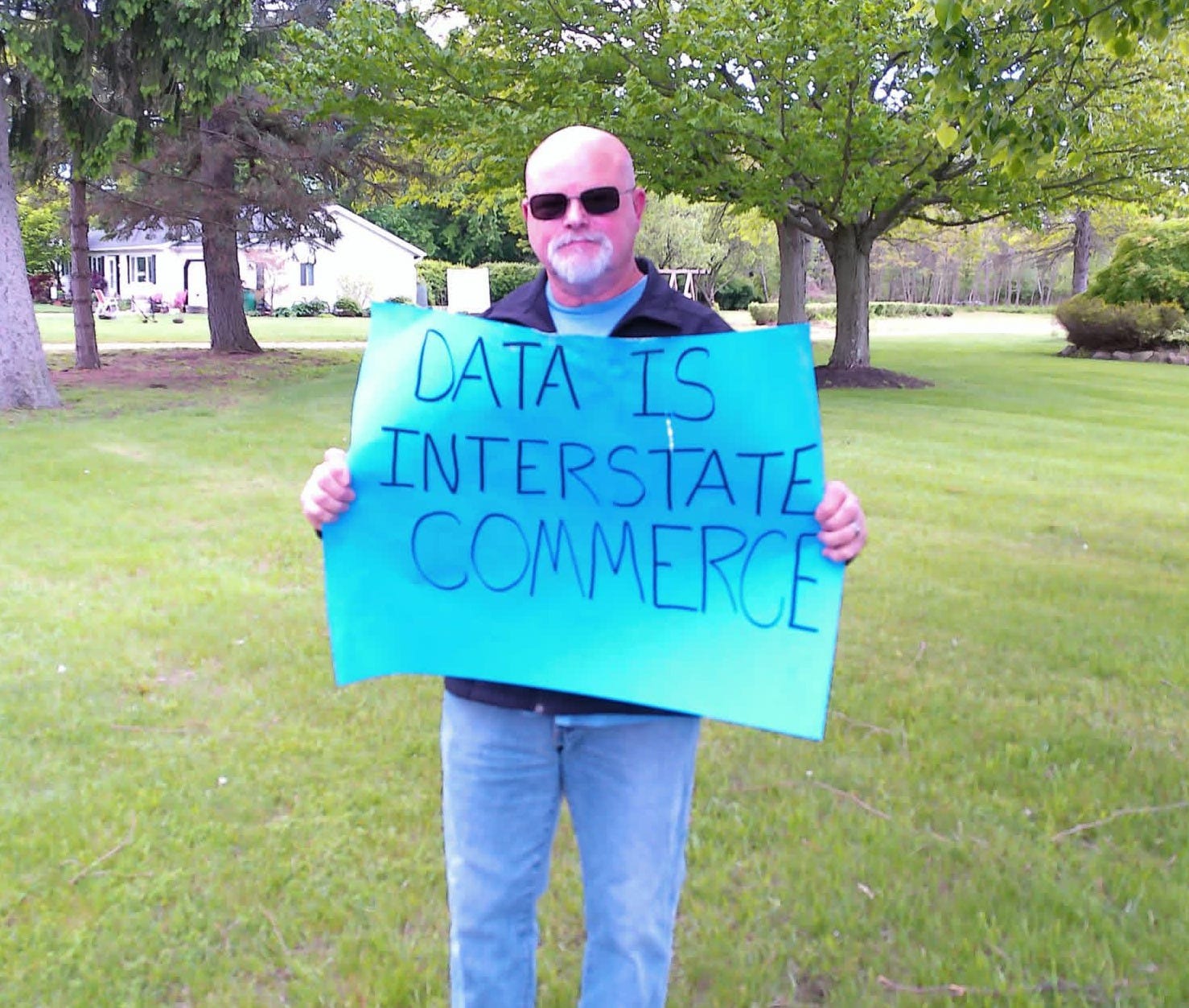
The entire ecosystem is designed to take things that used to just be human nature, aspects of our daily lives that were routine, and collect them, analyze them, and figure out a way to use that data to get us to pay for things that we used to exchange for free, as part of our way of life. It is a technological wonder that is designed to take our lives, and even our souls, turn them into commodified units, and process that data into new ways to make us pay for more things, and add fees to aspects of our lives that never used to cost us anything.
So, at its simplest, a data center is a manufacturing facility for data. Raw material comes in, it’s processed, and a finished product comes out, to be sold or traded by tech companies so they can enrich themselves off our behavior.
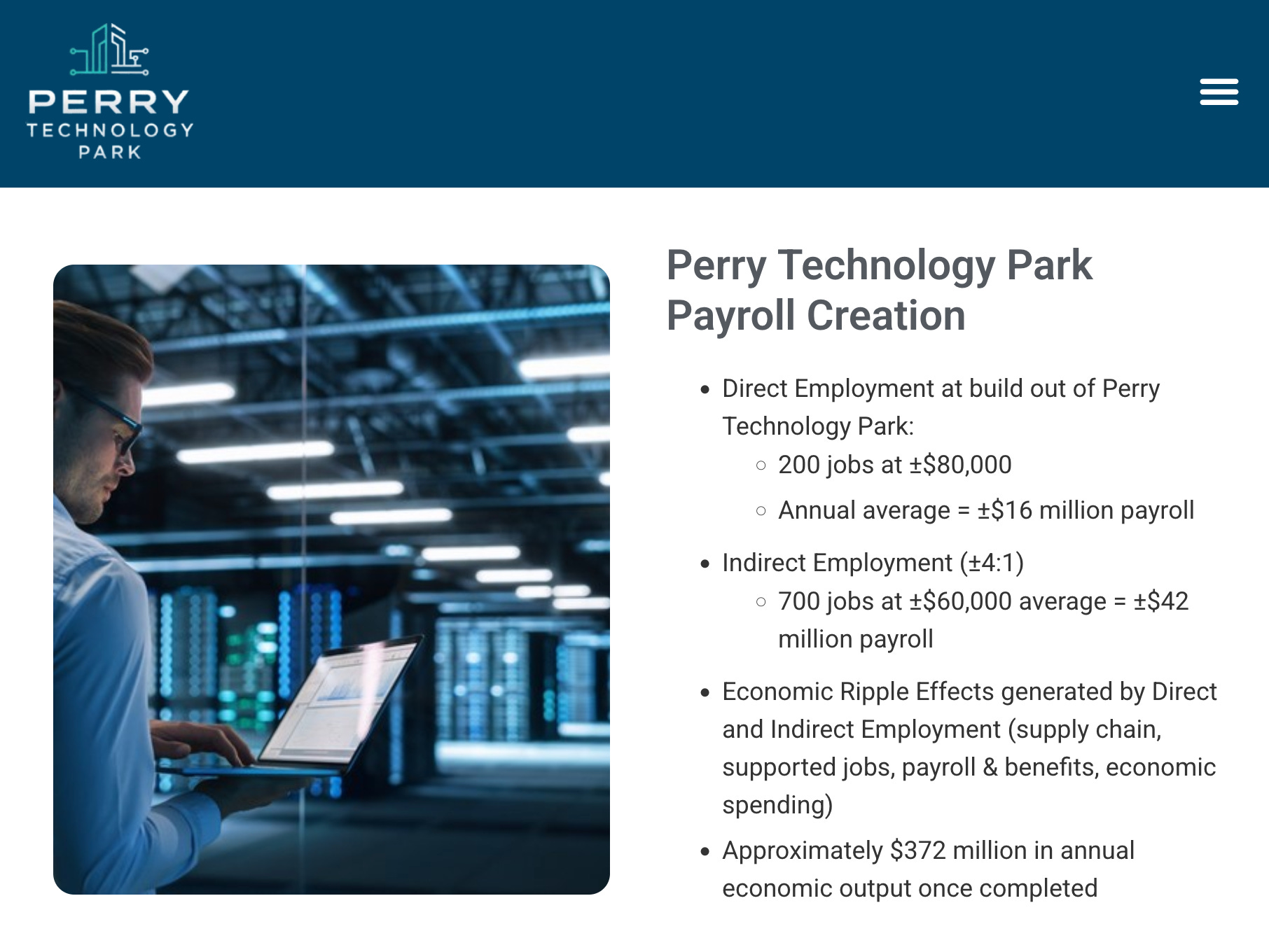
It is completely asinine to think that these facilities need 200 employees to operate them. They are designed to eliminate jobs, and to turn us into indebted consumers with no way to make a living like we used to.
Why would a data center employ 200 people? It’s always 200 people, in every presentation. In Perry, Shalersville, Conneaut, Slavic Village, it is always 200 people—because 200 people is enough to add to the tax base, but not enough to overwhelm a local school district. It’s a safe, non-threating number made up by consultants who are paid to come up with the best strategy to get approval for a project in a small community, without too many questions.
The truth is, when that data center is built, it will employ about a dozen full-time employees, if that.
No one will be held accountable when the promises being made fail to come true.
The consultants and lawyers and representatives for the companies behind these projects will change at every step of the process.
The team that negotiates the sale, the team that asks for approvals, the team that asks for the abatements, and the team that shows up to build the thing won’t ever be the same.
No one will be held accountable when the promises are never fulfilled, and the long-term benefits will never materialize, because these are tech advancements that change in months, not decades. Data centers need to be built NOW because the IPO craze is about to start, and no one wants to miss at their chance to speculate and win big before it all implodes and leaves more damage than a nuclear reactor meltdown.
Local and state authorities need to demand guarantees from these companies for the promises, made in the form of cash.
They need to demand these in the form of bonds that are paid to local governments and held for the projected period of time over which developers claim the projects will benefit our communities.
They come into our townships, villages, small towns, and big cities and tell us they will bring in hundreds of millions of dollars over 31 years of operation, when we all know the “groundbreaking” technology that fills those buildings will likely fit in a handheld device in less than twenty years.
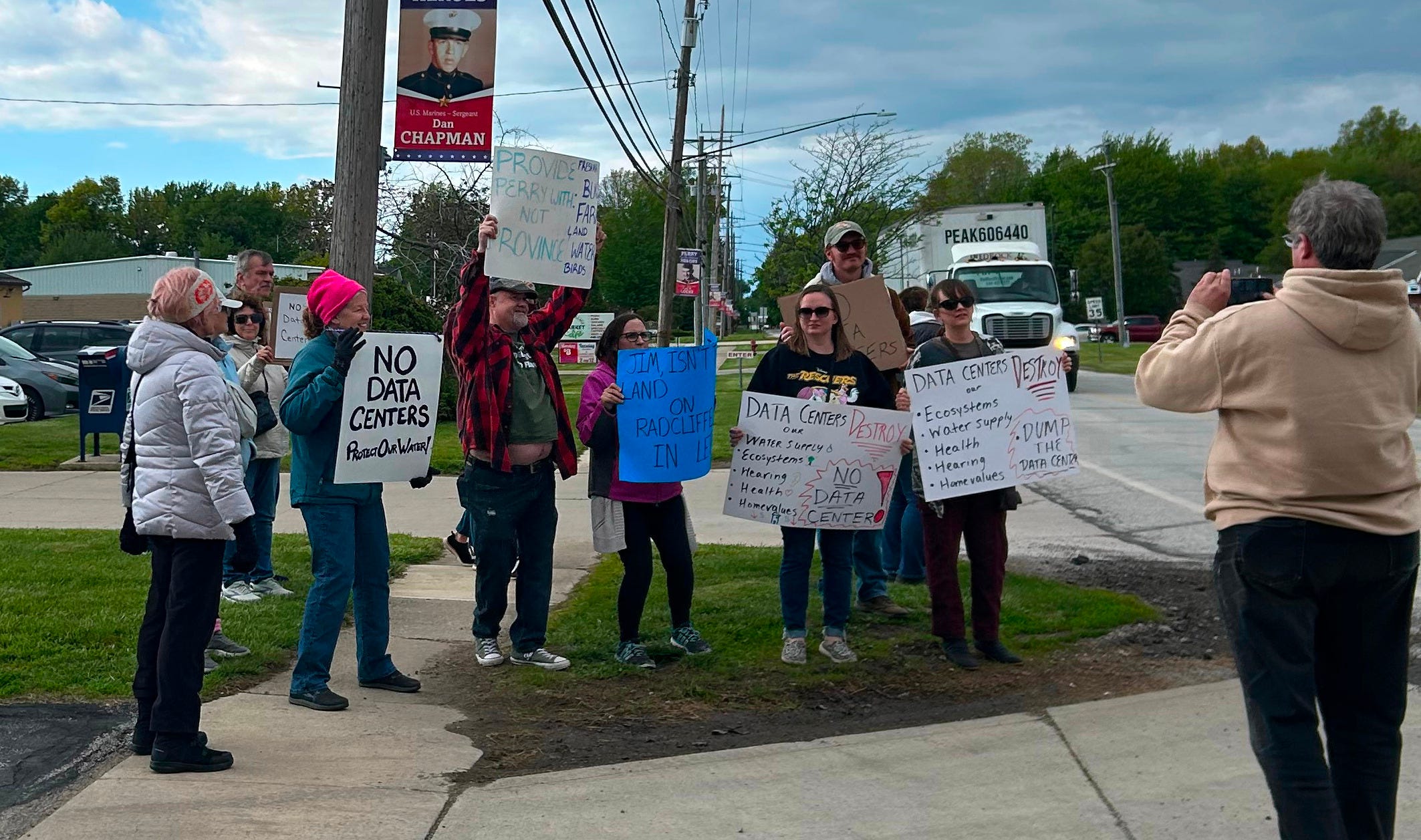
If they want access to our water, our electricity, our land, and our public infrastructure, and they are representing industries that brag about their trillion-dollar CEOs and history-making initial public offerings, then they can afford to pay us, too. There is no reason why they can’t give us financial, environmental, and employment guarantees, and generously contribute to our tax base.
If the only thing making their valuations so historic is that they need to extort our resources from us at a local level, then what valuation do they really have in the end?
It’s time to stop letting these companies take over our communities and leave nothing behind but a financial and environmental crater where farmland, schools, roads, and peace used to be.
We are standing up for our communities. We only ask—to our local, state and federal officials—that you stand with us.


